Sponsored article
What Should You Look for When Choosing a Chasuble Online? Cut, Dimensions, and Intended Use
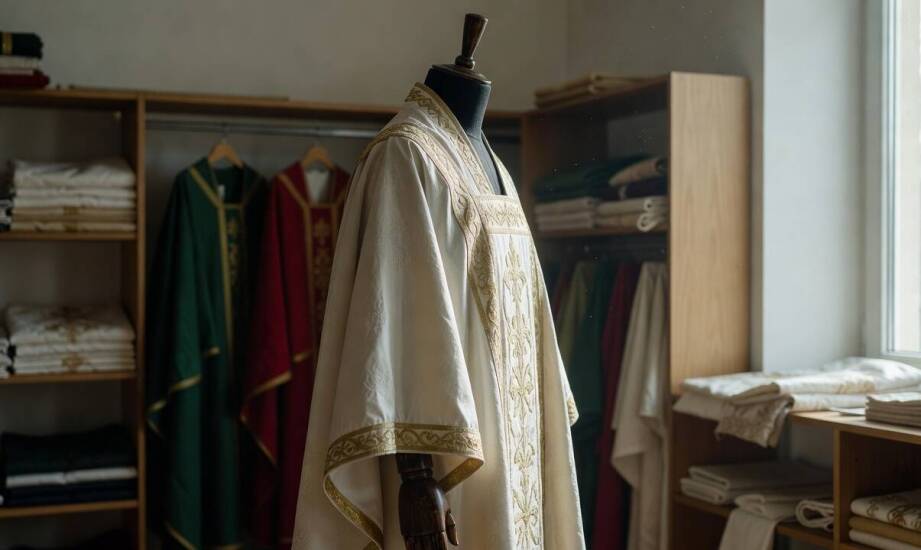
- How Does the Chasuble Style Determine Its Intended Use?
- How to Read Measurements and Proportions on a Product Page
- Why Are Detail Photos and Side Views So Important?
- What Do Colors and Decorative Motifs Reveal About the Liturgical Season?
- Roman Chasubles in Online Stores
- Logistics, Currencies, and International Shipping
- Evaluating a Chasuble Before Making the Final Decision
- FAQ
Selecting liturgical vestments online presents a unique challenge for priests and those responsible for sacristy supplies. A product name or a brief description is not always enough to accurately determine whether a particular garment is suitable for specific liturgical celebrations. Without the ability to physically inspect the fabric, assessing its weight, thickness, and weave depends entirely on the information provided online. Purchasing decisions therefore require careful attention to detail, from precise measurements to the quality of finishing. Understanding the information included in a product listing helps avoid costly mistakes and ensures that the vestment matches the character of the celebration, the celebrant’s build, and the conditions within a particular church.
Read more: Why Do Priests Wear Cassocks? The Symbolism of Clerical Attire
How Does the Chasuble Style Determine Its Intended Use?
Online stores organize their collections using historical style names that immediately indicate the garment's overall design. The Gothic chasuble is characterized by a broad silhouette across the shoulders and sides. This cut creates a more monumental appearance thanks to the generous amount of flowing fabric surrounding the body.
The Roman chasuble leaves more of the shoulders and forearms exposed, allowing greater freedom of movement during liturgical celebrations. Other product lines, such as semi-Gothic designs, combine elements of different styles to balance tradition and comfort. Understanding these distinctions helps narrow the search to models that align with local parish customs and liturgical preferences.
How to Read Measurements and Proportions on a Product Page
Numerical specifications help visualize how a vestment will fit and drape on the celebrant. A well-prepared size chart should include accurate information about overall length, shoulder width, and neck opening dimensions.
Many descriptions mention a length of approximately 105 centimeters, but this figure should be understood as a common example rather than a universal standard, since actual dimensions depend on the specific cut. Different workshops often use their own tailoring patterns, making it important to compare all measurements with the celebrant’s height and build.
The garment should also allow sufficient room for albs, stoles, and other liturgical layers worn underneath. Adequate ease prevents excessive bunching of the alb and stole, contributing to a more dignified appearance during solemn processions and celebrations.
Why Are Detail Photos and Side Views So Important?
Product photography functions as a virtual fitting room. Careful analysis of images can prevent disappointment after delivery. Front-facing photographs reveal the overall silhouette and the placement of embroidered decorations on the front panel.
Side views demonstrate how the garment is cut and how the fabric falls when worn. Close-up images allow buyers to assess the quality of craftsmanship. Detailed macrophotography can reveal embroidery density and the precision of edging and finishing work.
Reputable vestment makers often provide close-up views of materials such as brocade, damask, or linen. Observing how light interacts with the fabric helps evaluate its texture, structure, and drape during use.
What Do Colors and Decorative Motifs Reveal About the Liturgical Season?
The fabric color is one of the most important indicators of when a vestment is intended to be used within the liturgical calendar. White and gold are traditionally associated with Christmas, Easter, and major feasts dedicated to Christ and the Blessed Virgin Mary.
Red is commonly used on Palm Sunday, Good Friday, Pentecost, and celebrations honoring martyrs. Green is the liturgical color of Ordinary Time, while purple signifies the penitential seasons of Advent and Lent.
According to liturgical tradition, rose may be used on Caudate and Later Sundays, while black is sometimes chosen for funeral liturgies. Chasuble selection should therefore reflect both liturgical regulations and the needs of the local community. Decorative motifs such as crosses, pelicans, and IHS monograms can further reinforce the symbolism of a particular celebration.
Roman Chasubles in Online Stores
Online retailers typically organize products in a way that makes browsing easier for clergy around the world. When viewing a chasuble for sale, buyers will often find a wide selection of carefully tailored Roman-style models.
For more traditional vestment sets, product descriptions may also include items such as matching stoles, maniples, burses, or chalice veils. Detailed descriptions often specify the arrangement of embroidery on both the back cross and front orphrey.
The distinctive side cut-outs that characterize the Roman style can make handling liturgical books and vessels more convenient during Mass. Clear product categorization also helps compare materials, linings, and embroidery techniques with diocesan requirements or the customs of a particular religious community.
Logistics, Currencies, and International Shipping
Purchasing liturgical vestments frequently involves ordering from specialized European workshops. Prices in professional online stores are typically displayed in international currencies such as euros. Clearly stated currency information and shipping costs help missionaries, monasteries, and parishes plan their budgets more effectively.
Because heavily embroidered vestments may require larger packaging and specialized handling, reviewing delivery fees before placing an order is advisable. Ars Sacra offers international shipping and secure packaging solutions for customers worldwide.
It is also worth remembering that vestments featuring complex machine embroidery or custom-made elements may require several weeks of production time, making early ordering essential before major liturgical celebrations.
Evaluating a Chasuble Before Making the Final Decision
Understanding the information presented on a product page is the foundation of making an informed purchase. Reviewing dimensions carefully helps determine whether a particular garment will provide appropriate comfort and freedom of movement.
Examining side-view photographs and enlarged embroidery details allows buyers to evaluate craftsmanship without physically handling the fabric. Comparing measurements with the style of the vestment and its intended liturgical season can help avoid practical issues during celebrations.
A thorough review of every aspect of an online offer increases confidence that the chosen vestment will serve the faithful well and remain in excellent condition for years to come.
The style name helps classify vestments and indicates the type of celebration for which they are most suitable.
Dimensions, proportions, and neck opening measurements help assess fit and compatibility with other liturgical garments.
Front, side, and close-up photographs reveal the garment’s silhouette, fabric behavior, embroidery quality, and finishing details.
Liturgical colors and decorative motifs identify the vestment’s intended use within the Church calendar.
Roman chasubles provide a good example of a category where product descriptions, photography, and construction details clearly support purchasing decisions.
Currency options, international shipping, and production times are also important considerations.
A careful review of product information helps match the vestment to ministry needs, local tradition, and the rhythm of liturgical celebrations.
FAQ
What information is most important on a chasuble product page?
The most important details include the cut, measurements, photographs, liturgical color, and intended use. Together, these elements help determine whether the vestment will be comfortable, appropriate for the celebration, and consistent with local liturgical practice. Material specifications and finishing methods are also valuable indicators of quality.
Why are side-view photographs of a chasuble so important?
Side-view images show how the fabric drapes over the shoulders and behaves during movement. They make it easier to evaluate proportions and freedom of movement, particularly in more traditional and structured designs.
Does production time matter when ordering a chasuble online?
Yes. Custom-made and embroidered chasubles often require several weeks of production. Knowing the lead time helps parishes and clergy plan purchases ahead of important celebrations and avoid last-minute delivery issues. International shipping policies and payment currencies should also be reviewed before placing an order.
You might be interested

How Does Recycled Plastic Affect the Stiffness, Material Purity and Performance of Bar Trays?

What Determines the Profitability of Large Fuel Storage Facilities in South African Conditions?

How does the quality of raw materials affect the taste of pork meat?