Sponsored article
Why Does a Flexible-Finger Disc Remove Scale from Sheet Metal Edges After Thermal Cutting?
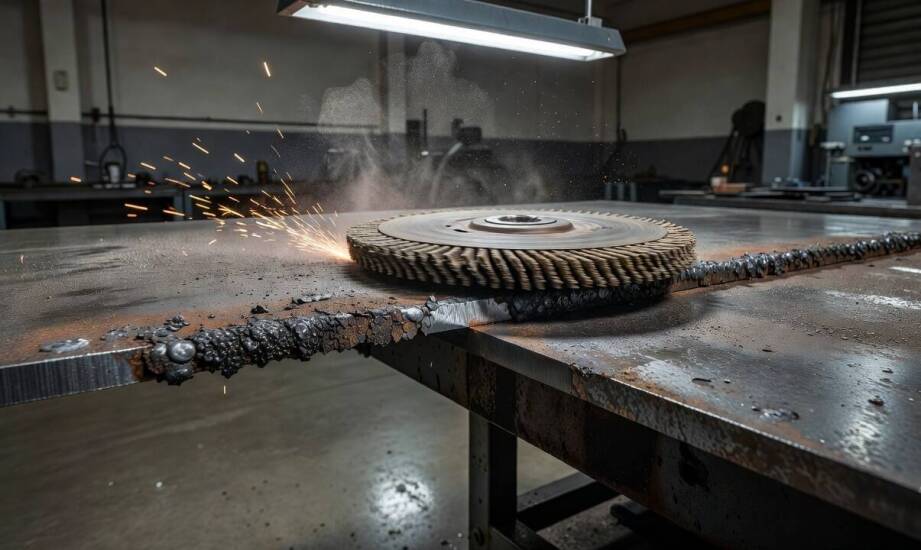
After plasma or oxy-fuel cutting, sheet metal edges are often left with an uneven and sometimes extremely hard layer of scale. Thermal cutting processes melt the edge of the material within fractions of a second, while rapid cooling causes slag deposits to form and bond strongly to the steel surface. This layer can significantly hinder subsequent mechanical and surface-finishing operations.
Read more: How Does Recycled Plastic Affect the Stiffness, Material Purity and Performance of Bar Trays?
Welding onto contaminated edges can be problematic because hard oxide inclusions may affect weld quality. Likewise, applying powder coating or zinc protection to an uncleaned surface can reduce coating performance. Residual deposits may also create hidden corrosion points, making proper cleaning essential before fabrication. For manufacturers serving industries such as automotive engineering and heavy machinery production, complete scale removal is often a necessary preparation step before welding or finishing. Traditional hand grinding is time-consuming and may not deliver consistent results, which is why automated deslagging processes are increasingly used.
The Separation Mechanism of Flexible Fingers
Modern deburring and deslagging tools use vibration-dampening systems and hardened pins to mechanically break oxide deposits without damaging the main edge of the workpiece. A deslagging disc strikes protruding slag formations, combining rotational and oscillating movements during operation.
The direct impact of hardened pins transfers kinetic energy to the oxide layer, initiating microcracks within its brittle structure. Mechanical friction gradually weakens the bond between the slag and the steel substrate. The process is completed through the controlled flexing of the working fingers, which progressively separates the deposits from the cut edge of the sheet metal.
Thanks to their built-in flexibility, the fingers can adapt to natural irregularities created during thermal cutting. The cleaning process takes place without visibly damaging the steel itself, which offers an advantage over conventional abrasive wheels made with hard corundum materials. Instead of being ground into dust, the scale typically fractures and detaches in flakes.
Using completely rigid tools often requires grinding away the entire deposit in a single operation. This approach can accelerate abrasive wear and increase the risk of altering the geometry of the edge.
The thickness and structural consistency of the oxide layer largely determine how the tool behaves during machining. Thin and uniform deposits can be removed with relatively low working pressure, whereas thick and heavily fused slag formations usually require an initial reduction phase before they can be successfully detached from the steel. Impact-based cleaning is particularly effective when processing thick structural plates, while more ductile deposits can be removed further along the production line using flexible cross-brush stations.
Operating Parameters and Thermal Cutting Technology
The cutting method has a major impact on the physical characteristics of scale, which is why machine settings must be adjusted accordingly.
Oxy-fuel cutting generates a substantial amount of heat and typically leaves a thick, strongly bonded slag layer composed of hardened droplets. Plasma cutting, by contrast, often produces thinner but considerably harder deposits that adhere closely to the lower edge of the material and can resist softer abrasive materials.
In automated finishing lines, flexible spindle speeds and adjustable tool pressure are commonly used, since fixed settings rarely deliver optimal results across different steel batches. Heavy slag formed during oxy-fuel cutting may require slower conveyor speeds to increase the exposure time of the edge to the deslagging tools.
Automated scale removal has become a fundamental stage in modern sheet metal processing facilities. The impact head usually works in full synchronisation with the remaining machining units within a pass-through system. Such a configuration allows for comprehensive oxide removal, smooth edge rounding and light surface finishing within a single pass. Proper configuration of each processing station directly influences the final condition of components transferred to downstream manufacturing departments.
The industrial development of this sector is driven by continuous innovation in machine and tooling design. Madora has introduced steel-finger deslagging discs designed for demanding sheet metal applications. These tools can be integrated with the company’s GP deburring systems and GL cleaning modules, where they perform the most demanding impact-removal operations. The approach helps reduce the need for manual scale removal and supports consistent processing quality in industrial environments.
Factors That Determine Edge Quality After Cutting
The final quality of a cleaned edge depends on a combination of interconnected factors, including material properties, edge geometry and process parameters.
The grade of carbon steel, material thickness and the type of cutting gas used all influence the hardness of the slag formed during cutting. The effectiveness of mechanical deslagging is then determined by the optimal hardness of the impact fingers, the flexibility of the head suspension system and the precise calibration of tool pressure.
When these variables are properly matched, manufacturers can consistently produce components free from production residues without unnecessarily reducing the load-bearing cross-section of the cut edge.
The use of impact discs solves processing challenges in production lines where conventional abrasive systems struggle with heavy structural plate applications. In everyday industrial practice, stable deslagging parameters support uninterrupted operation within automated welding departments. Automated processing also reduces the variability associated with manual grinding operations.
Uniformly cleaned material is generally easier to form on press brakes, while robotic welding processes benefit from improved access to the base material during joining operations.
You might be interested

How does the quality of raw materials affect the taste of pork meat?

Why Choose Certified Products in Wholesale Offerings?

How to Avoid the Most Common Mistakes During Kitchen Renovation?